MICHIGAN PHENOLOGY / FROG CHORUS
THE LIVING CALENDAR · MICHIGAN WETLANDS

When will the frogs start singing?

That first spring night when the marsh suddenly comes alive. Follow Michigan's chorus north, find a good night to listen and learn exactly who's making the noise.

9 Michigan regions7-night NWS outlook13 real frog calls
Explore the chorus forecast ↓
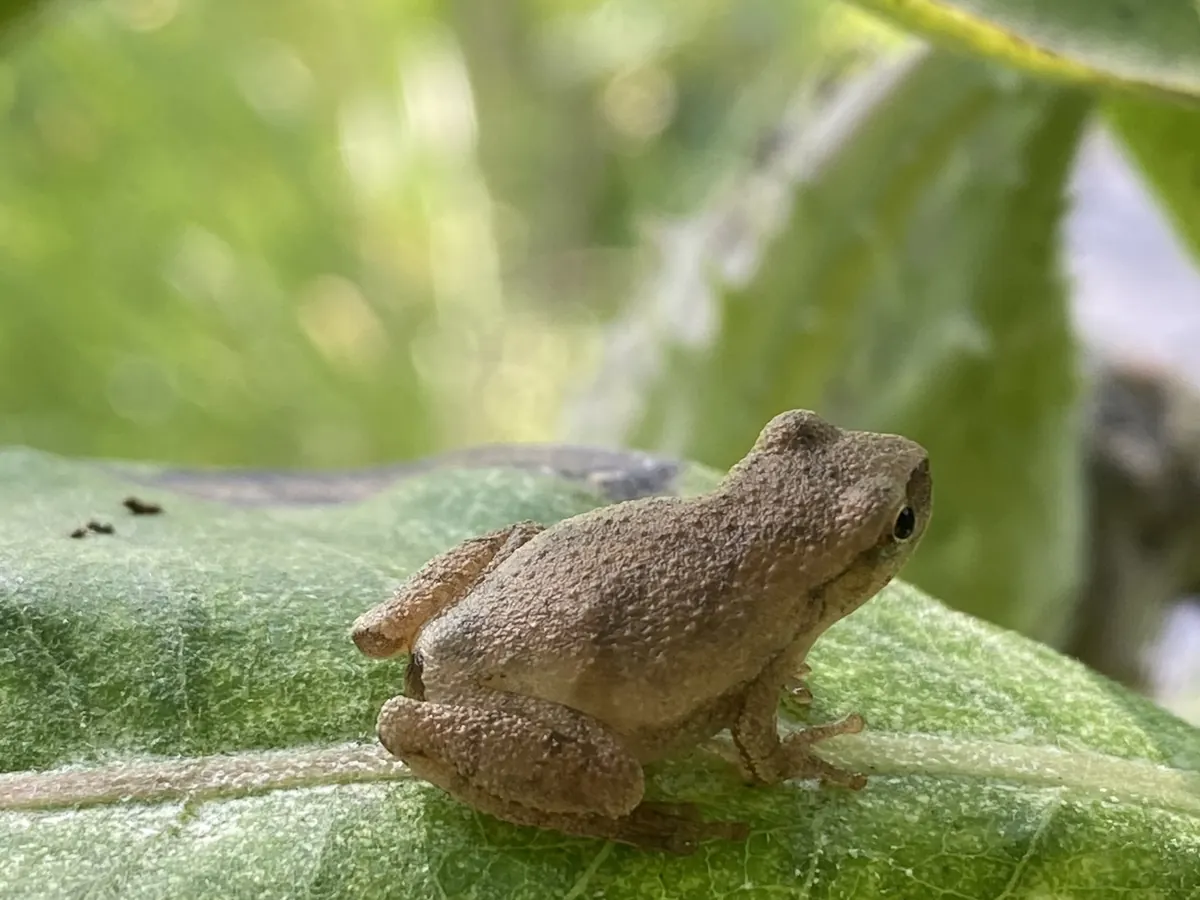
Tan northern spring peeper perched on a broad green leafNorthern spring peeper · Sara L Giles, CC0
SELECTED REGION

Saginaw Bay / Bay City

Eastern Lower Peninsula

CHORUS STATUSOff-season / calendar guideDo not infer active calling from today's weather
NEXT GOOD EVENINGNot currently forecastLive timing resumes during spring and summer
THE NIGHTLY FORECAST

Will the chorus be calling?

Temperature, wind, precipitation and recent wet days inform the opportunity index. It is a forecast for listening conditions, never a claimed audio detection.

NEXT SEVEN EVENINGSUpdating…
Checking regional forecast data…

100 = favorable weather for an in-season species, not a 100% chance of hearing it. No active species or incomplete weather = no numerical score. Weather can change quickly.

LISTEN FOR THESE FROGS

Off-season preview

No Michigan frogs are in their calling window now. Learn the first voices of spring before they start.

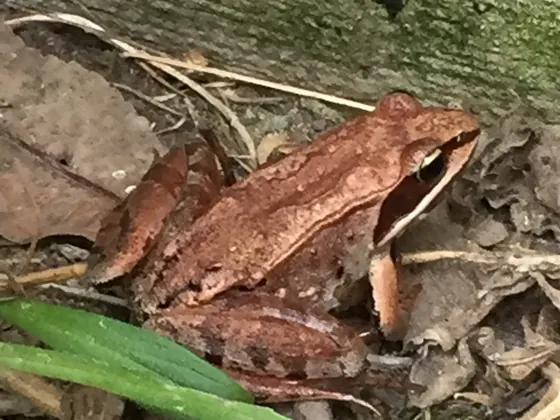
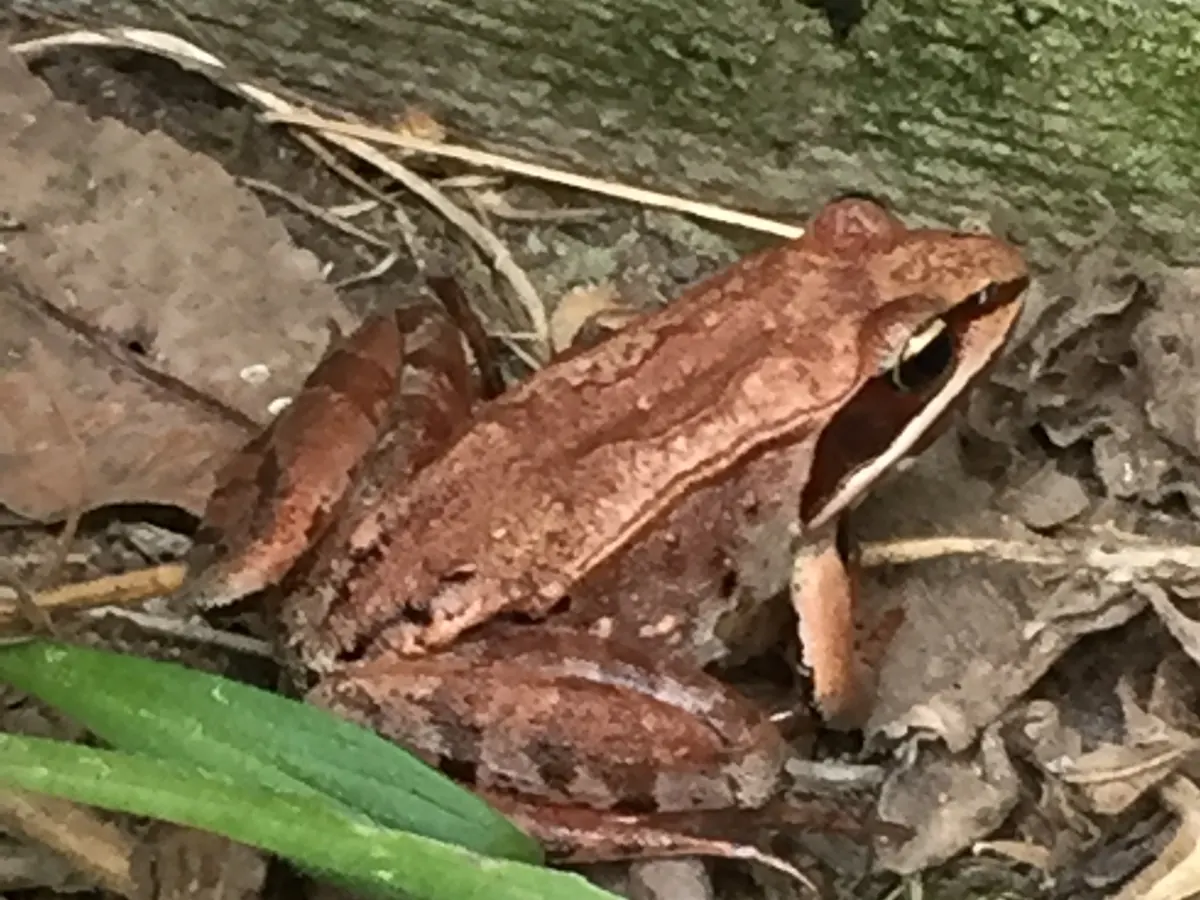
Reddish-brown wood frog with a dark mask through the eye, resting on dead leaves
Wood frogDuck-like cluckingUsually starts Mar
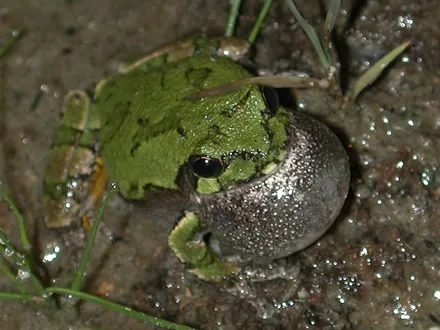
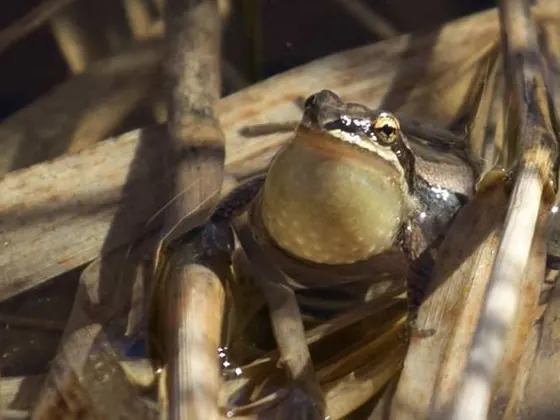
Western chorus frog calling with its throat sac inflated among dead marsh grass
Western chorus frogRaspy rising trill, like a thumbnail run along a combUsually starts Mar
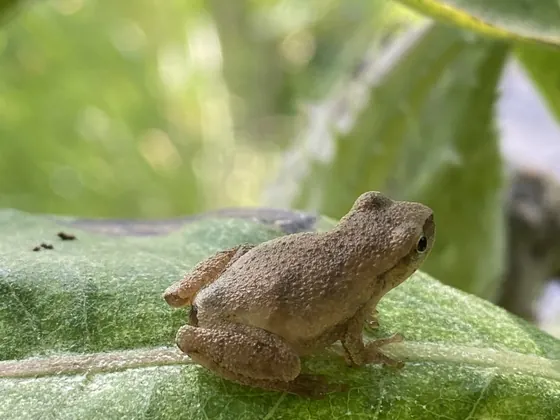
Tan northern spring peeper perched on a broad green leaf
Northern spring peeperHigh, piercing single peepsUsually starts Mar
All 13 calls in the soundboard ↓
FROM DETROIT TO THE KEWEENAW

A different chorus in every region

Choose your location. The map changes seasonal timing, likely species and weather outlook. Markers represent forecast points, not actual frog sites.

Loading Michigan map…
Forecast regions only · no frog locations or confirmed audio detections

Choose a region

Regional forecasts are not wetland-level measurements. Shorelines, tree cover, pond depth and winter thaw can shift activity substantially.

THE CHORUS CALENDAR

Who joins the concert—and when?

Typical windows shown for Saginaw Bay / Bay City, shifted broadly for north–south climate. These are guides, not verified 2026 starts.

Calendar endpoints are approximate editorial seasonal windows and should not be mistaken for observed calling start or end dates. Isle Royale's boreal chorus frog is a special case, not represented by the mainland regional forecasts.

THE MICHIGAN FROG SOUNDBOARD

All 13 Michigan frogs and toads

See each frog and press Play to hear its real call. Recordings are from the USGS amphibian call library, plus two verified iNaturalist recordings for species USGS did not record.

Reddish-brown wood frog with a dark mask through the eye, resting on dead leavesOut of season · Mar–May

Wood frog

Lithobates sylvaticus

Soft quacking and clucking, like a flock of ducks

Calling months
Mar–May in Saginaw Bay / Bay City
Habitat
Shallow woodland vernal pools
In Michigan
Statewide, from southern woodlots to the Keweenaw

Photo: askalotl, CC0 · Call: USGS, public domain · Species profile ↗
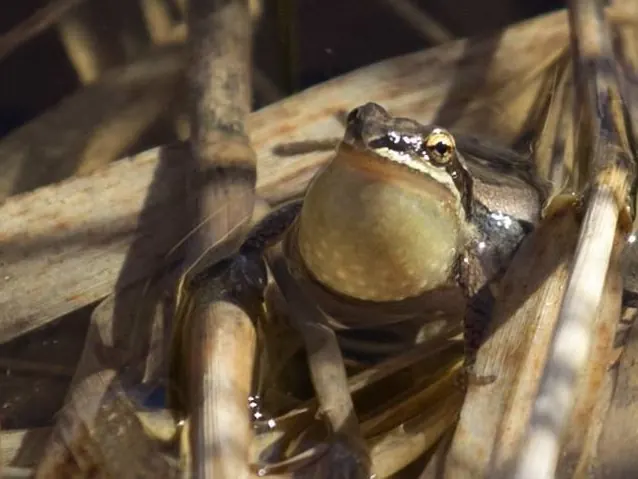
Western chorus frog calling with its throat sac inflated among dead marsh grassOut of season · Mar–May

Western chorus frog

Pseudacris triseriata

A rising raspy trill, like a fingernail drawn across a comb

Calling months
Mar–May in Saginaw Bay / Bay City
Habitat
Flooded fields, grassy ditches and temporary pools
In Michigan
Widespread in the Lower Peninsula; local farther north

Photo: © Chris McAnlis, CC BY 4.0 · Call: USGS, public domain · Species profile ↗
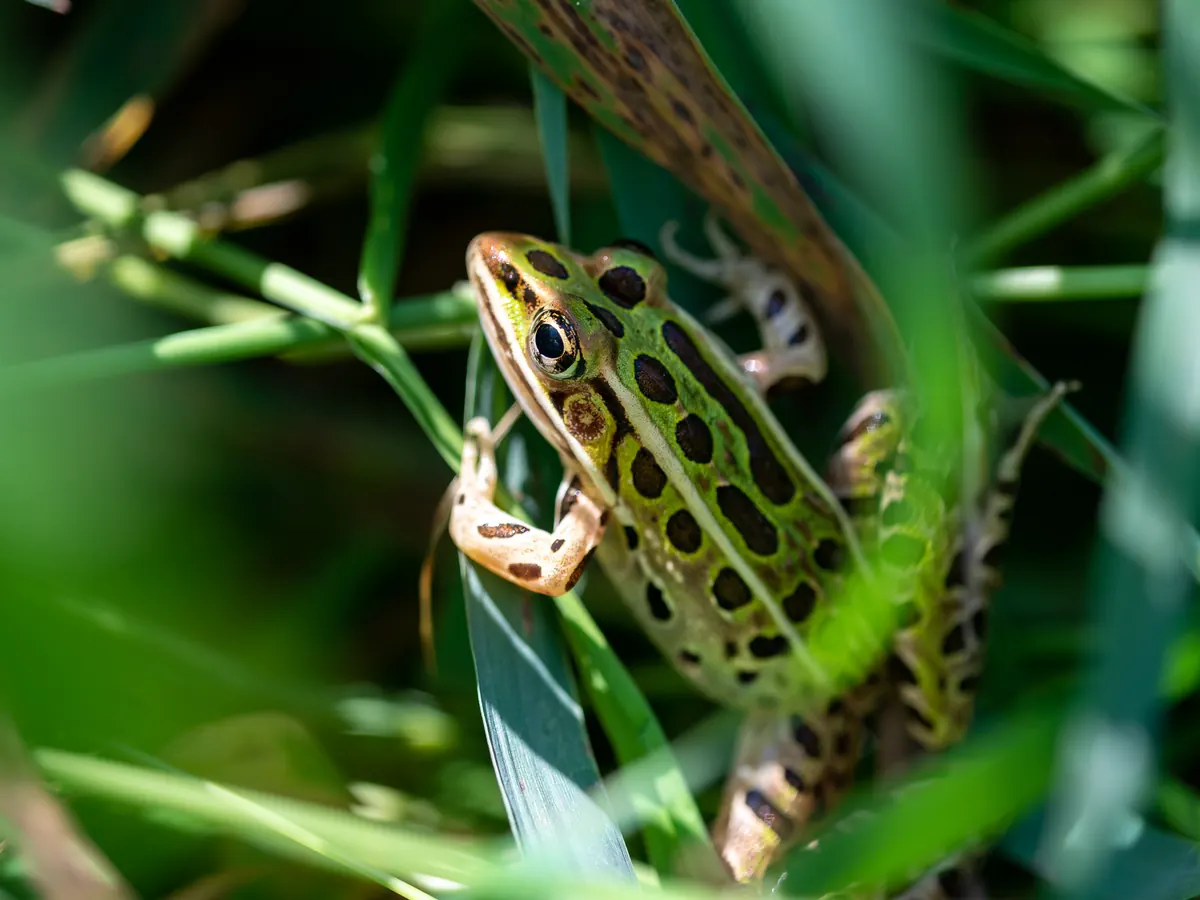
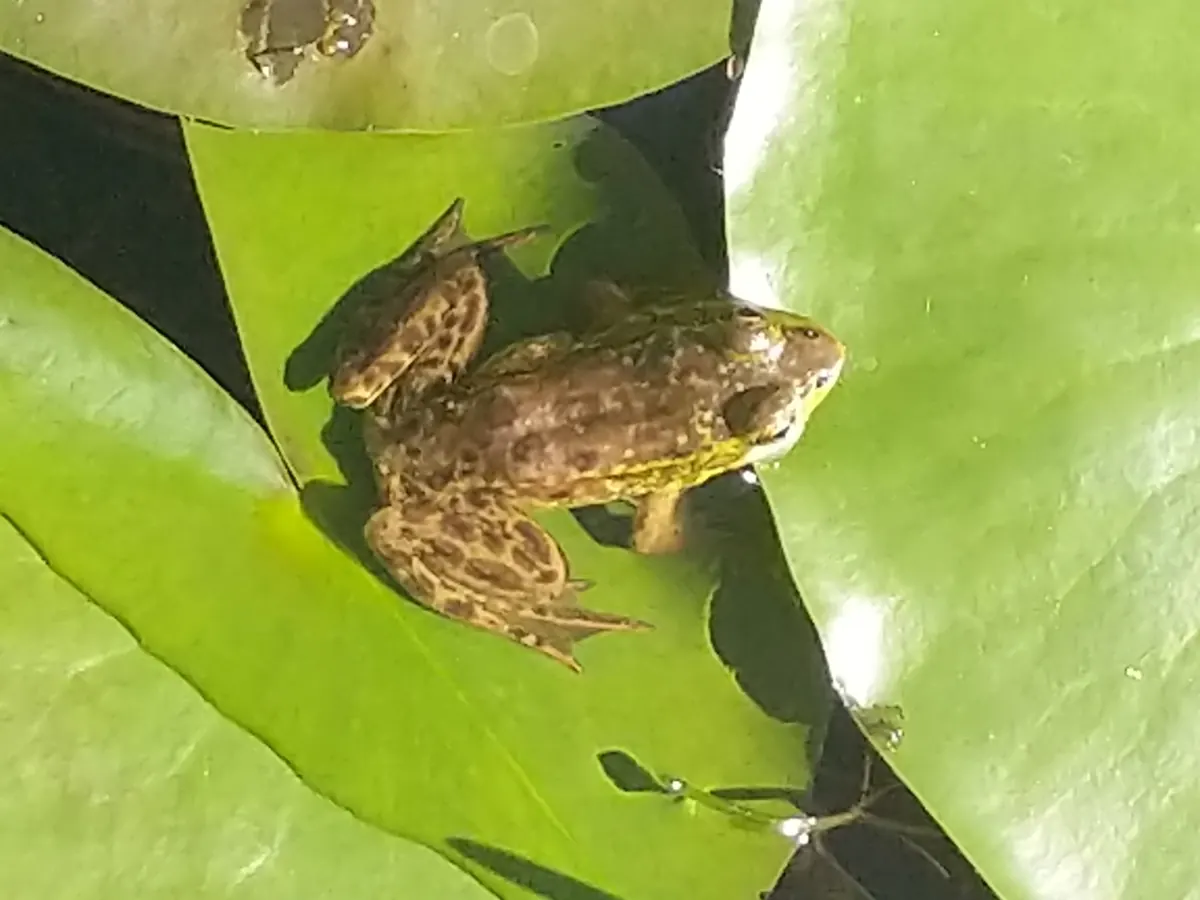
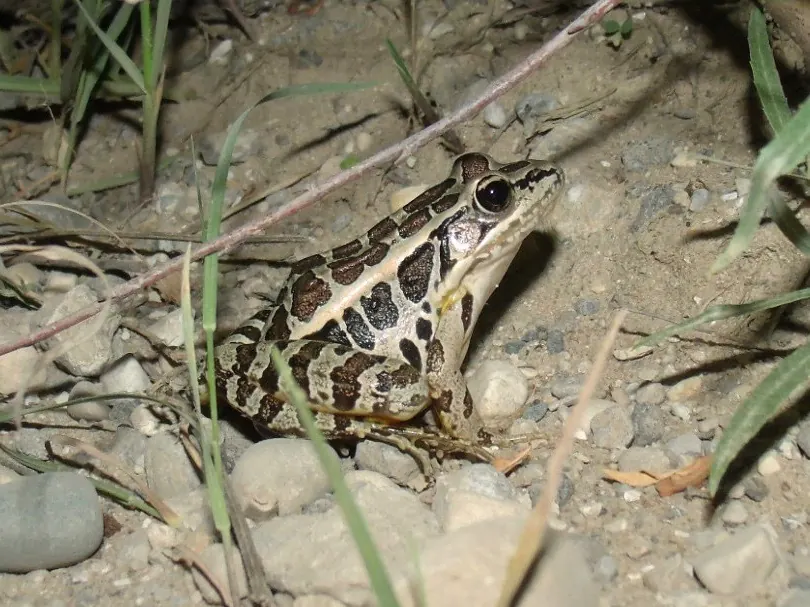
Pickerel frog with squarish dark spots in two rows on sandy gravelOut of season · Apr–Jun

Pickerel frog

Lithobates palustris

Short low-pitched snore, softer than a leopard frog

Calling months
Apr–Jun in Saginaw Bay / Bay City
Habitat
Cool streams, seeps and wetland edges
In Michigan
Scattered and local; special concern, so no sites are shown

Species of special concern: do not publish sensitive sites.

Photo: © John G. Phillips, CC BY 4.0 · Call: Kent P. McFarland, CC0 · Species profile ↗

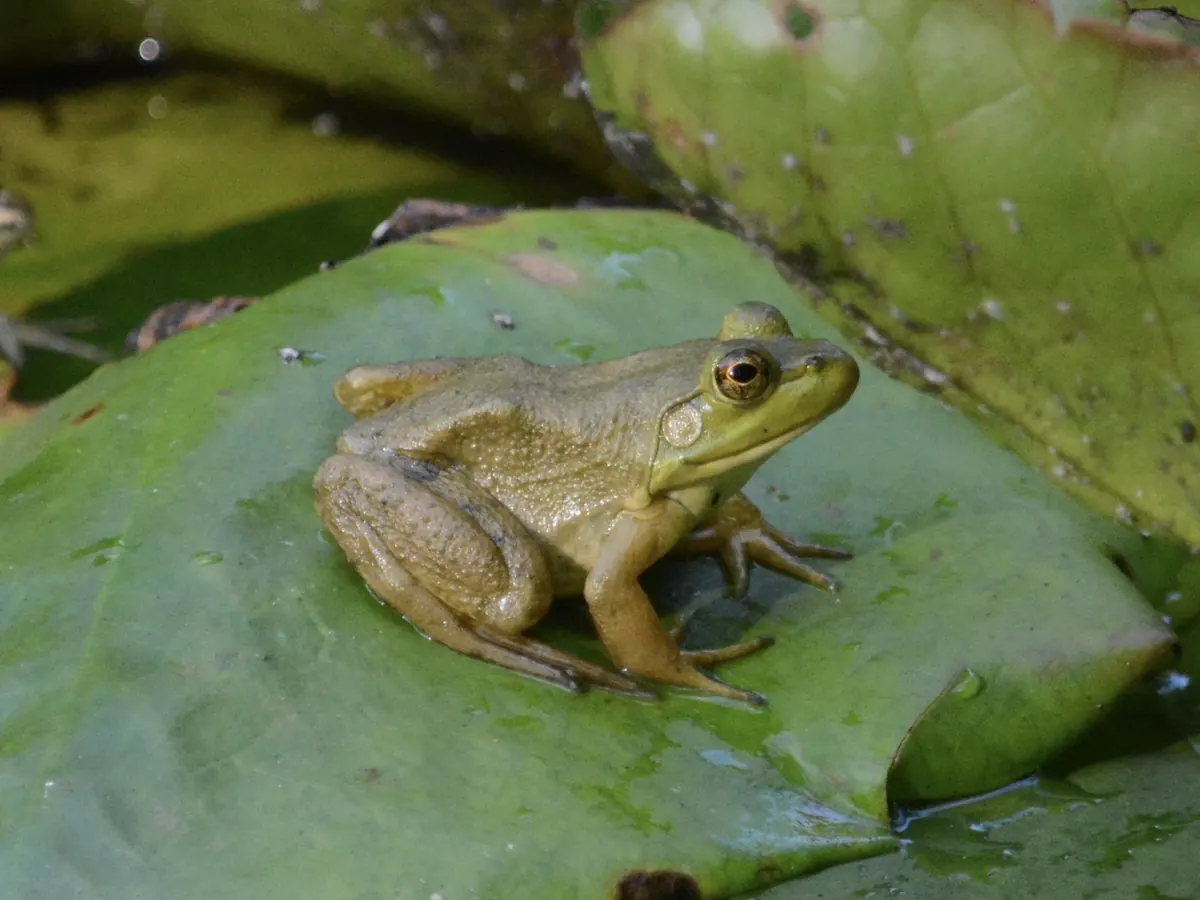
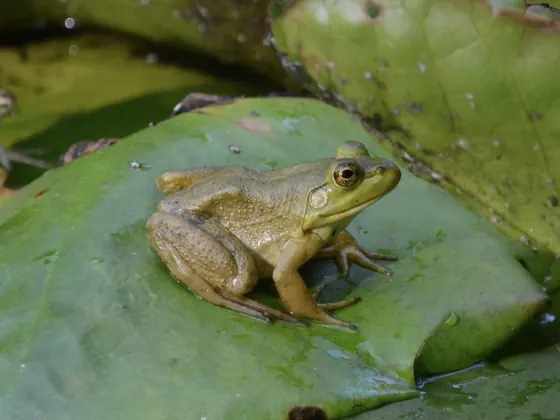
Large American bullfrog sitting on a lily padOut of season · Jun–Sep

American bullfrog

Lithobates catesbeianus

Deep jug-o-rum notes

Calling months
Jun–Sep in Saginaw Bay / Bay City
Habitat
Lakes and permanent deeper-water wetlands
In Michigan
Permanent lakes and ponds; most common in the Lower Peninsula

Photo: © gpete, CC BY 4.0 · Call: USGS, public domain · Species profile ↗
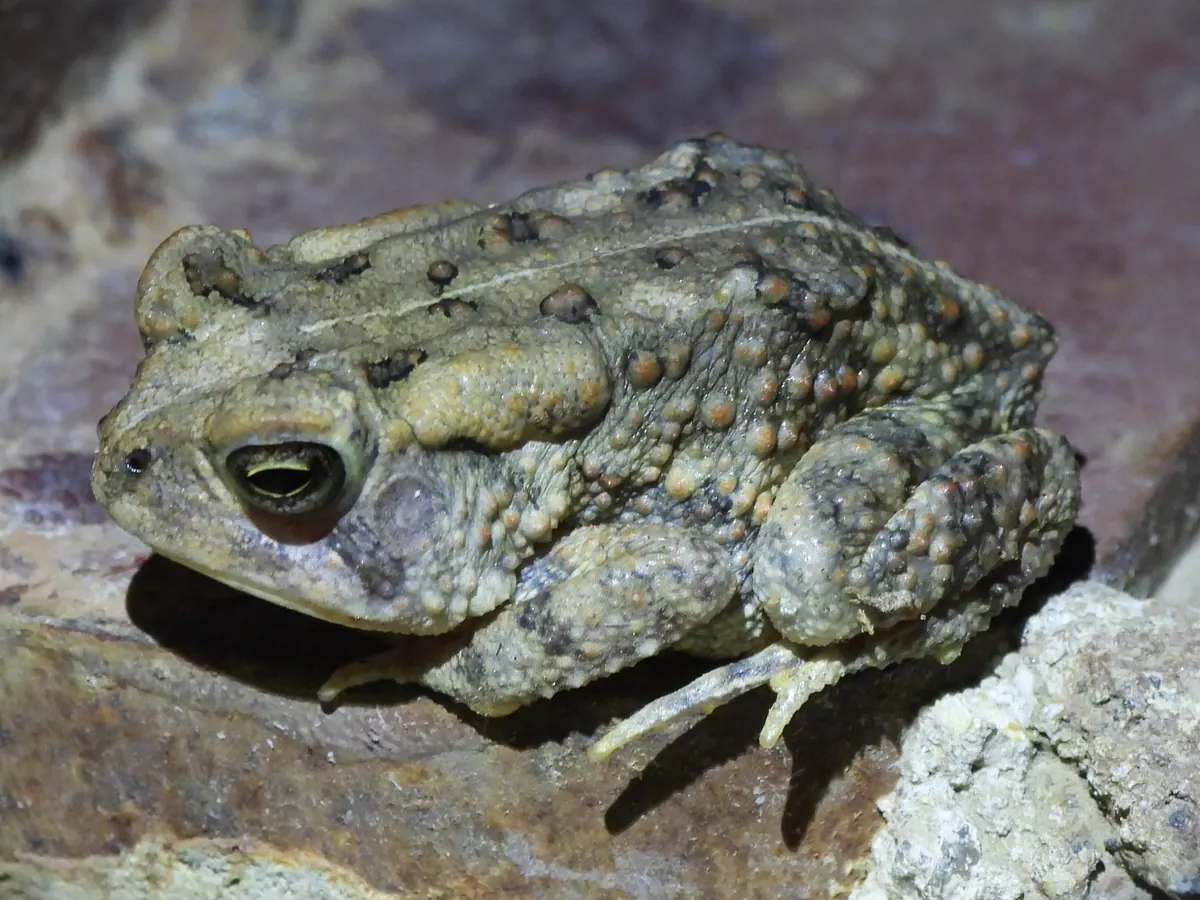
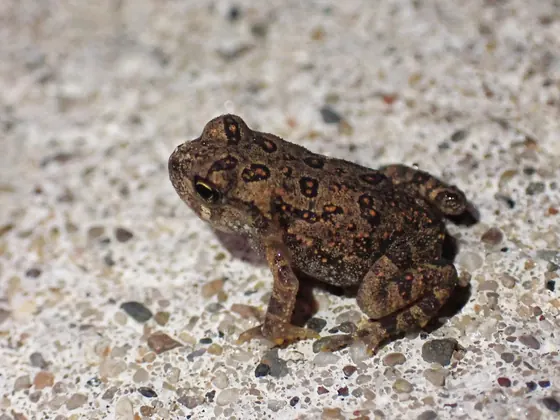
Fowler's toad with dark-spotted warty skin on a stoneSpecial concern · local only

Fowler's toad

Anaxyrus fowleri

Short nasal bleat, unlike the American toad trill

Calling months
May–Jul in Saginaw Bay / Bay City
Habitat
Sandy shores in parts of southern Michigan
In Michigan
Local in sandy areas of the southern Lower Peninsula; special concern, so no sites are shown

Special concern; habitat-dependent, not a statewide forecast.

Photo: © Sam Kieschnick, CC BY 4.0 · Call: © Moxie C., CC BY 4.0 · Species profile ↗

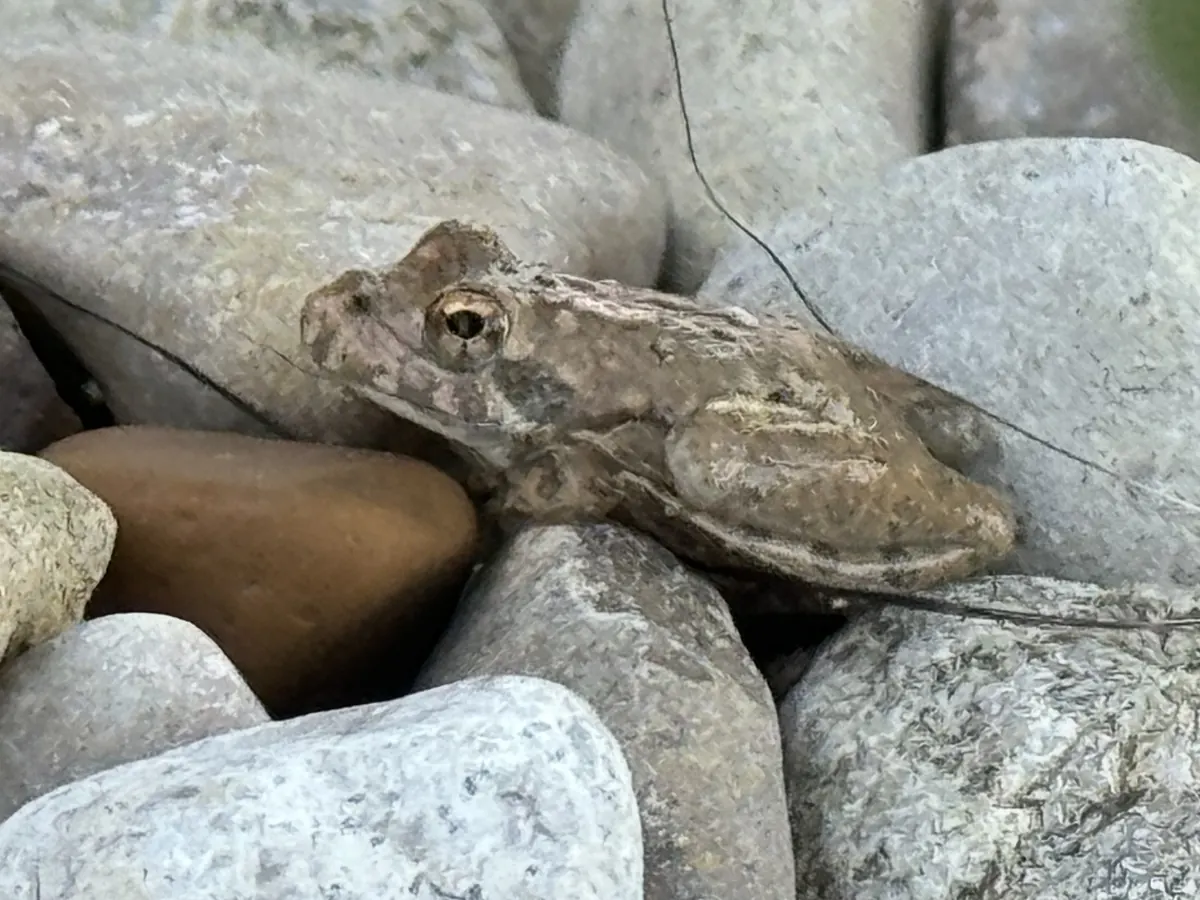
Small brown Blanchard's cricket frog among smooth gray stonesThreatened · local only

Blanchard's cricket frog

Acris blanchardi

Metallic click-click-click resembling two pebbles

Calling months
May–Aug in Saginaw Bay / Bay City
Habitat
Localized southern Michigan shallow wetlands
In Michigan
Southern Lower Peninsula only; threatened, so no sites are shown

Threatened in Michigan. No locality prediction or site pins.

Photo: © ramonsita625, CC BY 4.0 · Call: USGS, public domain · Species profile ↗
Every Play button uses a recording checked for species and licence (full media credits). Some taxa have restricted Michigan distributions. Fowler's toad is a species of special concern; Blanchard's cricket frog is threatened. No precise sites are provided. The DNR's official list includes both eastern and Cope's gray treefrogs, whose trills differ.

SOUND IT OUT

What frog am I hearing?

Match what you heard to a description, then press Play to compare. This is a listening aid, not automatic species recognition.

Reddish-brown wood frog with a dark mask through the eye, resting on dead leaves
Duck-like cluckingWood frog
Tan northern spring peeper perched on a broad green leaf
High single peepsNorthern spring peeper
Western chorus frog calling with its throat sac inflated among dead marsh grass
Comb-like raspy trillWestern chorus frog
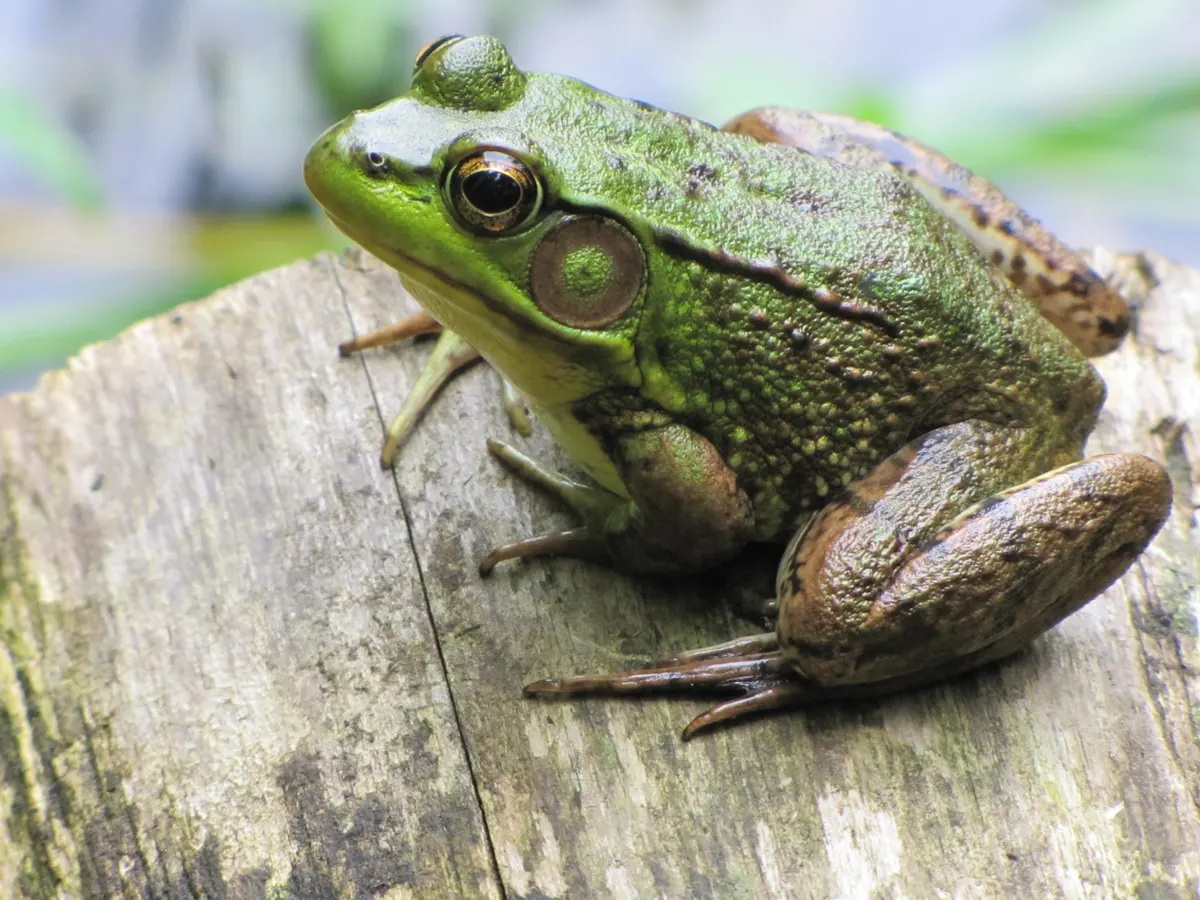
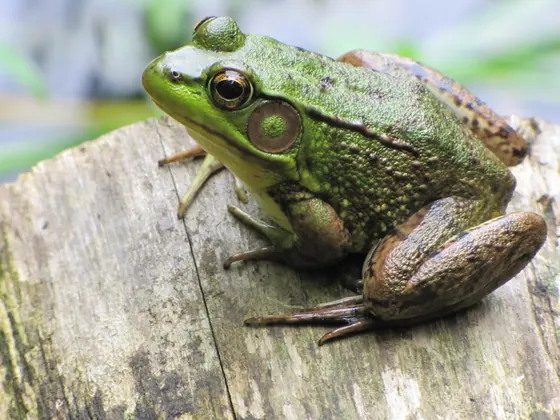
Green frog with a bright green face and large eardrum on a weathered log
Banjo-string twangGreen frog
Large American bullfrog sitting on a lily pad
Deep jug-o-rumAmerican bullfrog
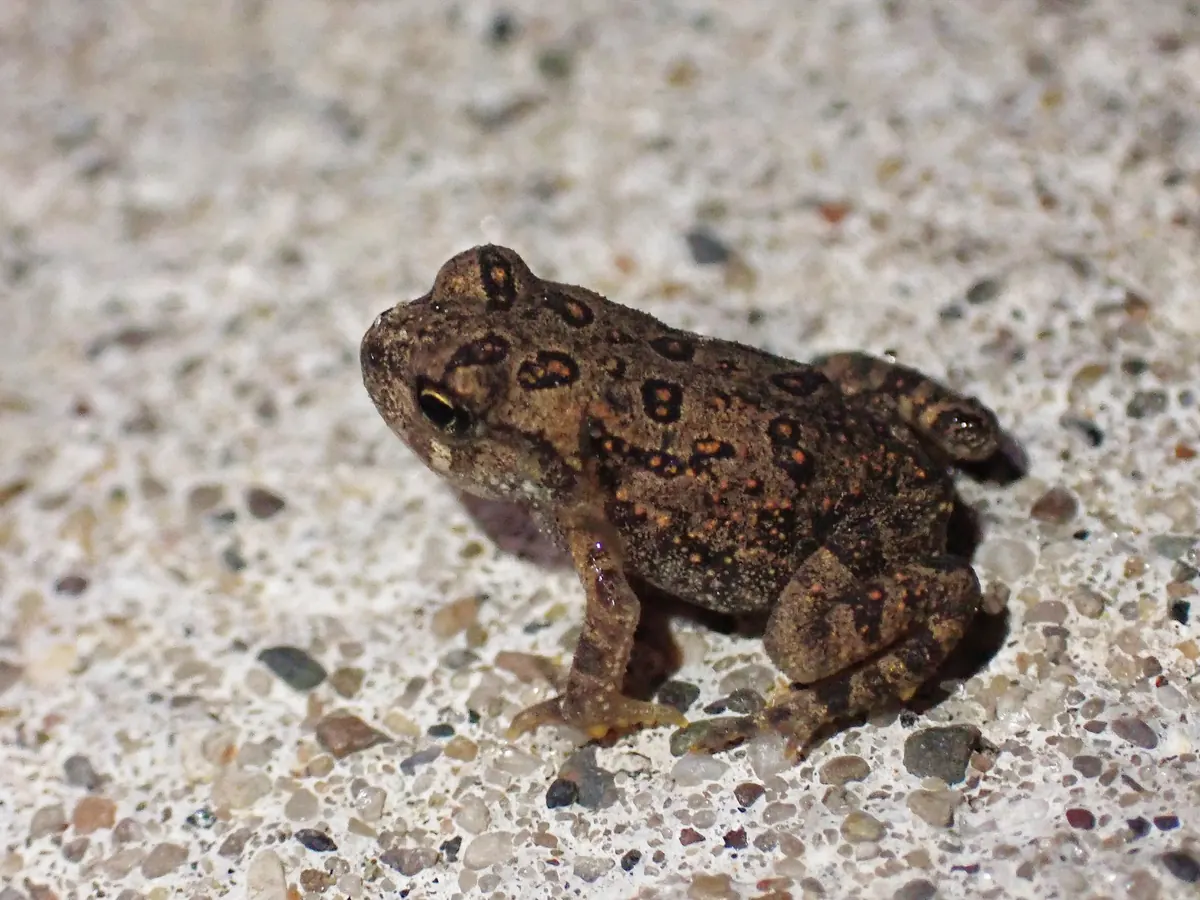
Brown eastern American toad with dark warty spots on pale concrete
Long musical trillEastern American toad

Spring peeper or western chorus frog?

Tan northern spring peeper perched on a broad green leafNorthern spring peeper

One clear, high note, repeated about once a second. A big chorus rings like sleigh bells.

Western chorus frog calling with its throat sac inflated among dead marsh grassWestern chorus frog

A rough, rising trill a second or two long, like running a thumbnail along a comb.

Both call on the same cold early-spring nights, often from the same pond. Listen for a clean note versus a raspy trill.

Eastern gray or Cope’s gray treefrog?

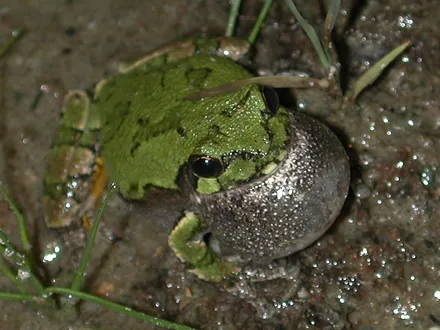
Eastern gray treefrog calling at night with its throat inflatedEastern gray treefrog

A slower, musical trill. You can almost count the pulses.

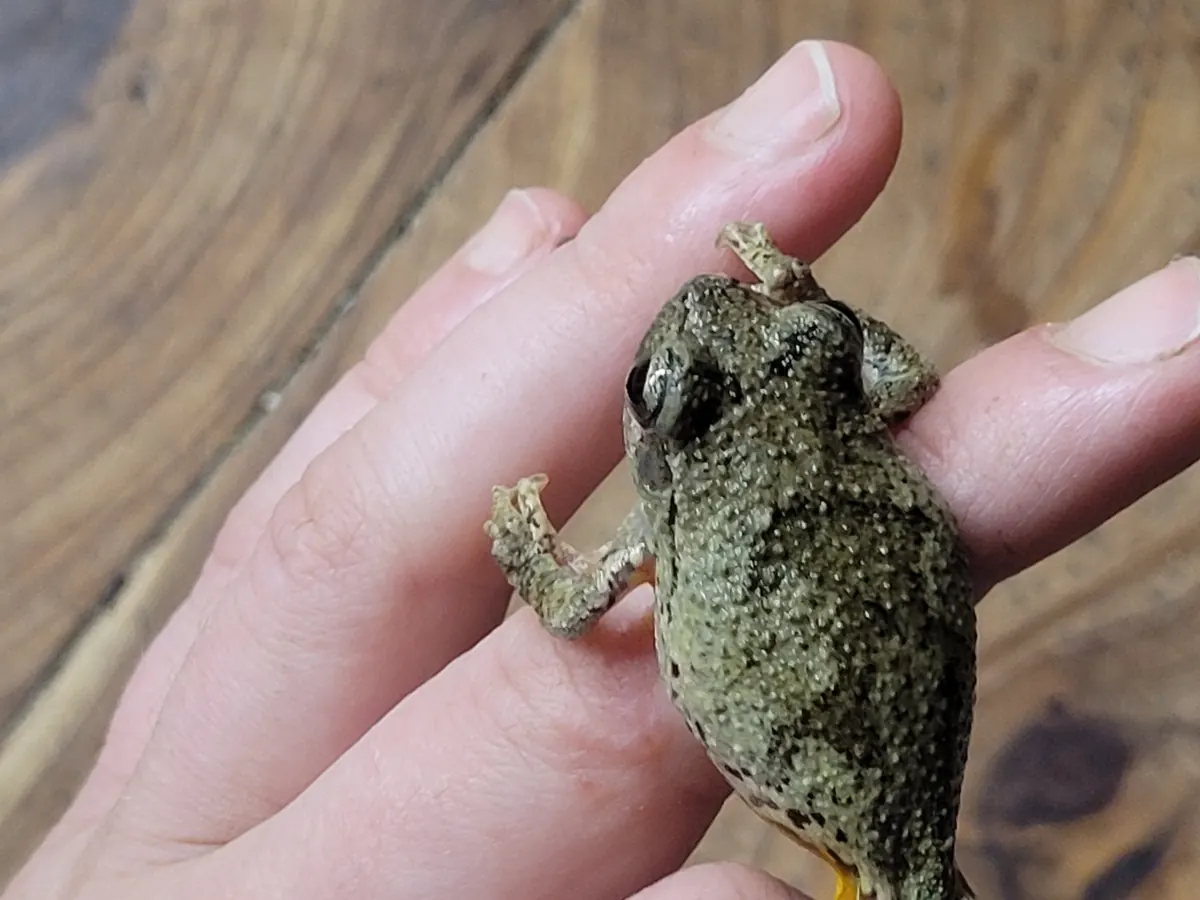
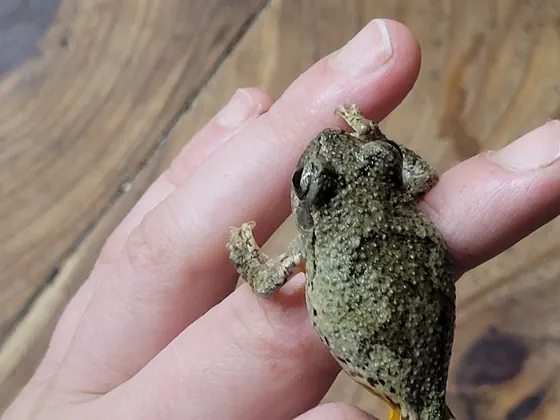
Cope's gray treefrog held in a hand, showing its gray warty skin and yellow thighCope's gray treefrog

A faster, harsher, buzzier trill. The pulses blur together.

They look identical, so the call is the only field mark. Warm nights speed both up, so compare frogs calling at the same time.

Green frog or American bullfrog?

Green frog with a bright green face and large eardrum on a weathered logGreen frog

A single “gunk,” like plucking a loose banjo string, often one note at a time.

Large American bullfrog sitting on a lily padAmerican bullfrog

A deep, booming “jug-o-rum,” usually repeated several times and heard from far away.

Both call from permanent ponds on summer nights. Pitch and repetition separate them quickly.

YOUR FIRST CHORUS WALK

How to hear the show

No expensive gear required. A quiet wetland edge and a few minutes of listening are enough.

01 · WHERE

Shallow water first

Try pond margins, flooded woods, roadside wetland edges and vernal pools. Stay on open public paths or your own property and keep out of sensitive breeding habitat.

02 · WHEN

Start at dusk

Choose a mild night with little wind. Wood frogs and chorus frogs may call during the day too. Early spring calls can be loud for only a few nights.

03 · HOW

Listen, don't disturb

Stand quietly for five minutes, then compare what you hear to the samples. Never collect frogs or enter a pond to get closer. Leave breeding sites undisturbed.

QUESTIONS PEOPLE ASK

Michigan frog chorus FAQ

When do spring peepers start calling in Michigan?

They typically start on mild spring evenings as thawed shallow wetlands become active. Southern Michigan can hear them in March and April; northern areas often follow weeks later. This tracker compares the seasonal window against local NWS forecasts and does not claim first calls without a recording.

What temperature do frogs start calling?

Species differ. Early wood frogs and chorus frogs can call on relatively cool spring days while toads, treefrogs and bullfrogs generally favor warmer conditions. Temperatures in the forecast are a planning guide, not biological switch points.

Do frogs call when it rains?

Many frogs become vocal during mild, wet periods, especially around breeding ponds. Heavy rain, wind or thunderstorms can make listening difficult or unsafe. The forecast considers rain and wind separately.

What does a wood frog sound like?

A wood frog chorus sounds like ducks quacking or clucking. Compare it to the piercing peep of a spring peeper and the comb-like raspy trill of a western chorus frog in the listening guide.

What is the best time of night to hear Michigan frogs?

A quiet evening after sunset is often productive, especially near shallow ponds. Some early spring callers also vocalize in daylight. Do not assume wetlands or parks permit entry after dark.

Are chorus scores actual recordings or frog population counts?

No. The 0–100 index is an editorial weather-fit comparison constrained by typical seasonal windows. It is not a measured chorus, a confirmed sighting, an abundance estimate or a numerical probability.

PHOTO AND SOUND CREDITS

Where every photo and call comes from

Eleven recordings are from the USGS ARMI frog and toad call library (public domain). USGS did not record the pickerel frog or Fowler’s toad, so those two calls are iNaturalist recordings whose identification was confirmed by other naturalists, shared under the licences shown. The Michigan DNR sound collection covers all 13 species and is the best place to keep practising. Volume is levelled so no call is startlingly louder than another; the calls themselves are unedited.

HOW THIS TOOL WORKS

Actual data. Clear limits.

Forecast temperatures, wind and precipitation come from the National Weather Service. The recent rainfall and temperature context, when available, comes from NOAA Regional Climate Center ACIS. Species and recordings are based on Michigan DNR and the USGS amphibian call library.

What's modeled: regional calling windows and a 0–100 editorial evening-conditions index. What's not measured: microphone detections, first calls, frog abundance, water temperature, wetland water levels or calling probability. NWS forecasts update automatically, usually within 30-minute caches. A single representative station does not describe every marsh.

Last refreshed: Awaiting feed ET. There is no confirmed calling observation feed.